Sunday, November 9, 2014

C4T #3
For this post, I am commenting on Mrs. Diane Dahl. She is a teacher in Texas and her blog is titled, For the Love of Teaching.
The first of Mrs. Dahl's posts I commented on was from November 3rd of 2013. I went back this far because I wanted to read this one a little more. I loved the posters she had pictures of and it intrigued me. It is titled, Thinking Across Content - Good Mathematicians Poster. The very first lines in her post are, "We all know that students who monitor their thinking while reading do better. Therefore it follows that students who monitor their thinking across ALL subject areas will do better in other subjects as well." She goes on to state that the problems students face is not even knowing they can monitor their thinking in other subjects. I completely agree with her, seeing as I was one of those students and unfortunately my daughter as well. She says there is a language to learning and that the brain looks for patterns to know what knowledge to store. We as teachers need to use this language to help students make inferences, predictions, and determine importance.
 Mrs. Dahl created these posters to help her students see the bridges between subject for her students. She uses the same vocabulary, but gears them towards each subject. These are amazing posters and I will definitely use these in my classroom. (Or maybe make a simpler version for the younger students) Mrs. Dahl is a very intelligent person and extremely creative when it comes to helping her students better themselves.
 My Comment:
I commented that my daughter and I are those types of students that have trouble monitoring our thinking during other subject and that I found her post to be helpful. I also told her that I was going to save the links to her work for future use. I left a link to my blog and EDM 310 class blog as well.
The second post I commented on was from November 9th of 2013. It was titled "How To Plan And Schedule Guided Reading Groups". As the title suggests, it is her advice and instruction on how to develop reading groups according to the students reading levels. First you determine the reading level, then group them about 4 to a group determining from the previous year. Next you schedule the groups on a calendar, setting them into rotation from lowest levels to highest, planning around assemblies and such. Mrs. Dahl then plans her lessons around this schedule and keeps a great record for the future.
My Comment:
Mrs. Dahl, I have really enjoyed your blog and this one is most helpful for me also. I am still so nervous about making sure my schedules are well planned and organized. I am not the best at either of those and am working on them daily. I like that you plan from the previous year, but am curious how you arrange them as the yer progresses and the students with it. Do you change their groups or just leave them there throughout the year? Again, I have enjoyed reading your posts and as I mentioned before I will be referencing them in my class blog as well. Best Wishes and God Bless! Sabrina Stapleton
The first of Mrs. Dahl's posts I commented on was from November 3rd of 2013. I went back this far because I wanted to read this one a little more. I loved the posters she had pictures of and it intrigued me. It is titled, Thinking Across Content - Good Mathematicians Poster. The very first lines in her post are, "We all know that students who monitor their thinking while reading do better. Therefore it follows that students who monitor their thinking across ALL subject areas will do better in other subjects as well."


I commented that my daughter and I are those types of students that have trouble monitoring our thinking during other subject and that I found her post to be helpful. I also told her that I was going to save the links to her work for future use. I left a link to my blog and EDM 310 class blog as well.
The second post I commented on was from November 9th of 2013. It was titled "How To Plan And Schedule Guided Reading Groups". As the title suggests, it is her advice and instruction on how to develop reading groups according to the students reading levels. First you determine the reading level, then group them about 4 to a group determining from the previous year. Next you schedule the groups on a calendar, setting them into rotation from lowest levels to highest, planning around assemblies and such. Mrs. Dahl then plans her lessons around this schedule and keeps a great record for the future.
My Comment:
Mrs. Dahl, I have really enjoyed your blog and this one is most helpful for me also. I am still so nervous about making sure my schedules are well planned and organized. I am not the best at either of those and am working on them daily. I like that you plan from the previous year, but am curious how you arrange them as the yer progresses and the students with it. Do you change their groups or just leave them there throughout the year? Again, I have enjoyed reading your posts and as I mentioned before I will be referencing them in my class blog as well. Best Wishes and God Bless! Sabrina Stapleton
Saturday, November 1, 2014
Blog #11
Back To The Future
Brian Crosby - 4th Grade Teacher
Agnes Risley Elementary School
Sparks, Nevada
This man is a wonderfully motivated teacher! He gave his 4th graders a survey to see where they stood in understanding and learned that only a few even knew what town they lived in, what country and barely knew their addresses and phone numbers. Mr. Crosby came to the conclusion of, "Narrow Curriculum BAD - Active Learning GOOD!" Using the same procedures as PBL, he made a project he titled "High Hopes". The students had to build a helium balloon with a camera and send it into the world to travel and film. These children wrote about it, blogged about it, got hopes from others around the world to send with their balloon and even TAUGHT a class in New Zealand how to make a "High Hopes Balloon" of their own. It was amazing to see the results of this project with the level of teaching these students had been exposed to all their lives. Mr. Crosby also had a new student come to class, a little girl diagnosed with Leukemia who would never be able to come to school, so he decided to include her in everyday class by setting up Skype. I've learned from Mr. Crosby that learning should motivate the children to become learners, not learn how to be taught.
Blended Learning Cycle
Paul Anderson - High School AP Biology Teacher
Bozeman, Montana
Mr. Anderson's blended learning cycle is a really great approach to science. The cycle has 6 parts:
1. Question - Start with a driving question, something to "hook" the students (somewhat like PBL)
2. Investigation/ Inquiry - get a theory going
3. Video - Watch a video or podcast about the subject. (Mr. Anderson makes his own podcasts for class)
4. Elaboration - dive deeper into the subject with research. READ ABOUT IT!
5. Review - The teacher walks around the class asking for the students to teach him about their work. (Mr. Anderson says he believes you haven't learned something till you can effectively explain it to someone else)
6. Summary Quiz - kind of explains itself
I like this approach and I agree with Mr. Anderson. The way you know you have truly learned something is to be able to explain it to someone else and that starting with a question that excited to students or draws them in.
Mark Church - 6th Grade Teacher
Amsterdam
Making Thinking Visible
This short video gives a glimpse into what Mr. Church means by making thinking visible. In the video he has the students get into groups and write a headline about their project before they actually start it. Then he has them posted on a bulletin board. After the project is finished, he has them re-write their headlines and see how it has changed. He uses this to make it visible to the students how their views and understanding has changed. Which also makes their learning visible to him also. I think this is a great motivation for the students. I will incorporate this into my classroom, I think it is important for the students to see their own progress through different subjects.
Super Digital Citizens
Sam Payne - 5th Grade Teacher
Wilson Focus School
Omaha, Nebraska
I enjoyed this video tremendously!!! Mr. Payne really gets how to excite students with their work. This video is about a lesson he gives about digital safety, but it also covers several language arts standards. He starts with the quote, "With great power, comes great responsibility" - Spiderman Movie. Then he has his students use an online website to create their own Digital Superhero and comic. The students have to use themselves as the main character and have their super hero save the day when they aren't safe online. Mr. Payne teaches about being safe, respectful and responsible online, which is a huge lesson students must learn in this day and age. I love how he incorporates this safety lesson into a language arts curriculum and the students really enjoy making their own comics! This will be a lesson I use in the future.
Project Based Learning
Dean Shareski
This video is about a school in Canada that has taken 3 different classes; History, English and Information Processing, and combined them into a single class. Using PBL they have turned their class into an environment that the students have engaged themselves in learning. While this is working for them and I am intrigued on how they make this work, I could not see myself ever doing this. So to be honest, I have not learned as much from this video except that I could not work this way.
Roosevelt Elementary's PBL Program
Redwood City, California
I enjoyed watching this video and seeing the teachers and parents praise PBL. They state in the video that PBL teaches the students to think for themselves and to learn skills they will actually use in the real world. I completely agree with this. I also love the idea that PBL encompasses all the different learning styles into it with the freedom of student choice. It is a great teaching approach and will be the one that I hope to incorporate into my own classroom, because I truly agree that it is the best way to teach students.

Brian Crosby - 4th Grade Teacher
Agnes Risley Elementary School
Sparks, Nevada
This man is a wonderfully motivated teacher! He gave his 4th graders a survey to see where they stood in understanding and learned that only a few even knew what town they lived in, what country and barely knew their addresses and phone numbers. Mr. Crosby came to the conclusion of, "Narrow Curriculum BAD - Active Learning GOOD!" Using the same procedures as PBL, he made a project he titled "High Hopes". The students had to build a helium balloon with a camera and send it into the world to travel and film. These children wrote about it, blogged about it, got hopes from others around the world to send with their balloon and even TAUGHT a class in New Zealand how to make a "High Hopes Balloon" of their own. It was amazing to see the results of this project with the level of teaching these students had been exposed to all their lives. Mr. Crosby also had a new student come to class, a little girl diagnosed with Leukemia who would never be able to come to school, so he decided to include her in everyday class by setting up Skype. I've learned from Mr. Crosby that learning should motivate the children to become learners, not learn how to be taught.
Blended Learning Cycle
Paul Anderson - High School AP Biology Teacher
Bozeman, Montana
Mr. Anderson's blended learning cycle is a really great approach to science. The cycle has 6 parts:
1. Question - Start with a driving question, something to "hook" the students (somewhat like PBL)
2. Investigation/ Inquiry - get a theory going
3. Video - Watch a video or podcast about the subject. (Mr. Anderson makes his own podcasts for class)
4. Elaboration - dive deeper into the subject with research. READ ABOUT IT!
5. Review - The teacher walks around the class asking for the students to teach him about their work. (Mr. Anderson says he believes you haven't learned something till you can effectively explain it to someone else)
6. Summary Quiz - kind of explains itself
I like this approach and I agree with Mr. Anderson. The way you know you have truly learned something is to be able to explain it to someone else and that starting with a question that excited to students or draws them in.
Mark Church - 6th Grade Teacher
Amsterdam
Making Thinking Visible
This short video gives a glimpse into what Mr. Church means by making thinking visible. In the video he has the students get into groups and write a headline about their project before they actually start it. Then he has them posted on a bulletin board. After the project is finished, he has them re-write their headlines and see how it has changed. He uses this to make it visible to the students how their views and understanding has changed. Which also makes their learning visible to him also. I think this is a great motivation for the students. I will incorporate this into my classroom, I think it is important for the students to see their own progress through different subjects.
Super Digital Citizens
Sam Payne - 5th Grade Teacher
Wilson Focus School
Omaha, Nebraska
I enjoyed this video tremendously!!! Mr. Payne really gets how to excite students with their work. This video is about a lesson he gives about digital safety, but it also covers several language arts standards. He starts with the quote, "With great power, comes great responsibility" - Spiderman Movie. Then he has his students use an online website to create their own Digital Superhero and comic. The students have to use themselves as the main character and have their super hero save the day when they aren't safe online. Mr. Payne teaches about being safe, respectful and responsible online, which is a huge lesson students must learn in this day and age. I love how he incorporates this safety lesson into a language arts curriculum and the students really enjoy making their own comics! This will be a lesson I use in the future.
Project Based Learning
Dean Shareski
This video is about a school in Canada that has taken 3 different classes; History, English and Information Processing, and combined them into a single class. Using PBL they have turned their class into an environment that the students have engaged themselves in learning. While this is working for them and I am intrigued on how they make this work, I could not see myself ever doing this. So to be honest, I have not learned as much from this video except that I could not work this way.
Roosevelt Elementary's PBL Program
Redwood City, California
I enjoyed watching this video and seeing the teachers and parents praise PBL. They state in the video that PBL teaches the students to think for themselves and to learn skills they will actually use in the real world. I completely agree with this. I also love the idea that PBL encompasses all the different learning styles into it with the freedom of student choice. It is a great teaching approach and will be the one that I hope to incorporate into my own classroom, because I truly agree that it is the best way to teach students.

Friday, October 24, 2014
C4K Summary for October
My first student this month is Diana C. from Mrs. Rivera's 6th grade class in Florida. The post I commented on was posted September 21st titled "1000 reasons To Never Kiss A Boy". Basically, they were to read a story and answer the question, "Could this story have happened in real life? Why or why not?". Diana C. said yes and gave the reasons:
-It takes place in Philadelphia, Pennsylvania
-The protagonist works at a bagel store
-She has a boyfriend who cheated on her, two friends, and a mom
-Her dad and mom are divorced
-She has to create a float with her co-workers for a parade
-Her house is under renovation
I commented on her blog that she gave great answers and to keep up the good work!
My second student is Kenny from Mrs. Ripp's 7th grade class in Wisconsin. Mrs. Ripp is also the teacher whose blog I recently commented on, so I was excited about reading this students work. The post I commented on was posted October 9th and it was untitled. He writes about being a hero to someone. He thinks that to be a hero, you must be caring and he references Mrs. Ripp in this likeness. Which tells me a lot about this teacher.
I commented on him that he is right, to be a hero you have to care for people, but that anyone could be a hero, big or small. And that he should be careful in the future with proof reading, there were a few grammatical errors in his post.
The third student I was assigned to comment on was Jocelyn from Ms. Essenburg's 3rd grade class in Michigan. The post I commented on was from October 6th and titled All About Me. As the name states, it is all about Jocelyn herself! She sounds very much like my 7 year old little girl.
I commented:
Dear Jocelyn, I loved reading your introduction. You did a great job! I have a little girl who is 7 and LOVES Monster High also. Anyways, keep up the good work and keep an eye out for your grammar while writing. Making sure your punctuation is in the right places can help the person reading follow your train of thought better!
Student #4 assigned to me for commenting was Dartanian from Mr. Somerville's 6th grade in New Zealand. The post I commented on was from October 23rd and titled Welcome to Pt England. His post was all about being a good Pt Englander. He states you have to be cyber smart, respectful, polite and to "wear it with pride", which means to keep your clothes looking good. There were a few grammatical errors and it seemed that he never finished his last sentence, but overall it was a good post.
I commented: Hi Dartanian, great post! I like that you are all about being a good Pt Englander and from what you have written I can tell you know what that means. Keep up the good work and make sure you proof read before you post. :) I have to remind myself to do that, too.
-It takes place in Philadelphia, Pennsylvania
-The protagonist works at a bagel store
-She has a boyfriend who cheated on her, two friends, and a mom
-Her dad and mom are divorced
-She has to create a float with her co-workers for a parade
-Her house is under renovation
I commented on her blog that she gave great answers and to keep up the good work!
My second student is Kenny from Mrs. Ripp's 7th grade class in Wisconsin. Mrs. Ripp is also the teacher whose blog I recently commented on, so I was excited about reading this students work. The post I commented on was posted October 9th and it was untitled. He writes about being a hero to someone. He thinks that to be a hero, you must be caring and he references Mrs. Ripp in this likeness. Which tells me a lot about this teacher.
I commented on him that he is right, to be a hero you have to care for people, but that anyone could be a hero, big or small. And that he should be careful in the future with proof reading, there were a few grammatical errors in his post.
The third student I was assigned to comment on was Jocelyn from Ms. Essenburg's 3rd grade class in Michigan. The post I commented on was from October 6th and titled All About Me. As the name states, it is all about Jocelyn herself! She sounds very much like my 7 year old little girl.
I commented:
Dear Jocelyn, I loved reading your introduction. You did a great job! I have a little girl who is 7 and LOVES Monster High also. Anyways, keep up the good work and keep an eye out for your grammar while writing. Making sure your punctuation is in the right places can help the person reading follow your train of thought better!
Student #4 assigned to me for commenting was Dartanian from Mr. Somerville's 6th grade in New Zealand. The post I commented on was from October 23rd and titled Welcome to Pt England. His post was all about being a good Pt Englander. He states you have to be cyber smart, respectful, polite and to "wear it with pride", which means to keep your clothes looking good. There were a few grammatical errors and it seemed that he never finished his last sentence, but overall it was a good post.
I commented: Hi Dartanian, great post! I like that you are all about being a good Pt Englander and from what you have written I can tell you know what that means. Keep up the good work and make sure you proof read before you post. :) I have to remind myself to do that, too.
Blog # 10
Mrs. Cassidy's First Grade
Personally, I was very impressed by Mrs. Cassidy and her approach to technology. She states in her interviews with Dr. Strange that "technology is here to stay" and I know she is absolutely right. She was basically thrown into the technology world with the few computers she was given in her classroom, but she took off with it in a short time. I love her idea of a classroom web page and having all the links the children need in one place. This is something I will probably use in the future to help the younger students (if that is what I end up teaching) to find their way around, because under 2nd grade they really don't know what to search for on the internet. Having everything in one spot is perfect for any age!
Mrs. Cassidy also has students write a blog and it blows my mind that these are 1st graders doing this. And that they are posting pictures of their work to their blog is just amazing! I think this is a wonderful idea, because everyone in their family with access to a computer can see their work and progress throughout the year and comment on it. It's a great way to keep the students motivated on doing their best when they are provided with an outside audience to view their finished products. As far as the students safety on the computer/internet goes, Mrs. Cassidy takes her time explaining to them how to be safe. She makes sure they always use their first names only, never using their last. They are also not allowed to post pictures of themselves in their blogs, which is a great idea! She does however post pictures and videos of the students work, but she never associates their names with the students faces. Another rule she gives them is to never use their birthdays, which is a good rule of thumb for most anyone. Mrs. Cassidy takes the time to explain about websites and not clicking the links on the sides. She said she hasn't had a problem with her students being exposed to inappropriate material, so hopefully if I implement these rules into my classroom too, I won't have as many problems either!
She also uses video in her classroom, which is a great tool for capturing a lesson product among other things and it is exciting for students when they get to be on video. I also love her use of Skype in the classroom. It's so hard sometimes to get experts and other people to visit a classroom and this way they can take about 15-20 minutes out of their day no matter where they are to just sit down and talk to the students. I can imagine this would be a great tool for me to use in the classroom when I get there. Especially if there are people I can get to talk that coincides with the lesson. Also, I think her use of the Nintendo DS in the classroom is brilliant. When you can pull a jedi mind trick on the students and have them learning without knowing it, it's a beautiful thing. All kids love playing with Nintendo DS's and to have learning games for them, it is so much fun and they learn not only what is on the game, but they learn to share also. I hope there is a way to incorporate something like this into my future classroom. Kind of like our smart boards we recently began using. I love the ideas of what you can bring into the classroom with just a swipe of your finger! EDM 310 has really gotten me excited about teaching (even though it has been a tough class).
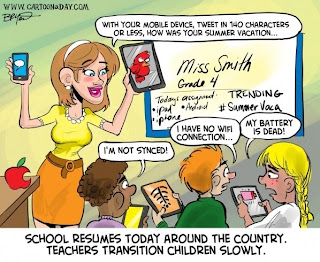
Personally, I was very impressed by Mrs. Cassidy and her approach to technology. She states in her interviews with Dr. Strange that "technology is here to stay" and I know she is absolutely right. She was basically thrown into the technology world with the few computers she was given in her classroom, but she took off with it in a short time. I love her idea of a classroom web page and having all the links the children need in one place. This is something I will probably use in the future to help the younger students (if that is what I end up teaching) to find their way around, because under 2nd grade they really don't know what to search for on the internet. Having everything in one spot is perfect for any age!
Mrs. Cassidy also has students write a blog and it blows my mind that these are 1st graders doing this. And that they are posting pictures of their work to their blog is just amazing! I think this is a wonderful idea, because everyone in their family with access to a computer can see their work and progress throughout the year and comment on it. It's a great way to keep the students motivated on doing their best when they are provided with an outside audience to view their finished products. As far as the students safety on the computer/internet goes, Mrs. Cassidy takes her time explaining to them how to be safe. She makes sure they always use their first names only, never using their last. They are also not allowed to post pictures of themselves in their blogs, which is a great idea! She does however post pictures and videos of the students work, but she never associates their names with the students faces. Another rule she gives them is to never use their birthdays, which is a good rule of thumb for most anyone. Mrs. Cassidy takes the time to explain about websites and not clicking the links on the sides. She said she hasn't had a problem with her students being exposed to inappropriate material, so hopefully if I implement these rules into my classroom too, I won't have as many problems either!
She also uses video in her classroom, which is a great tool for capturing a lesson product among other things and it is exciting for students when they get to be on video. I also love her use of Skype in the classroom. It's so hard sometimes to get experts and other people to visit a classroom and this way they can take about 15-20 minutes out of their day no matter where they are to just sit down and talk to the students. I can imagine this would be a great tool for me to use in the classroom when I get there. Especially if there are people I can get to talk that coincides with the lesson. Also, I think her use of the Nintendo DS in the classroom is brilliant. When you can pull a jedi mind trick on the students and have them learning without knowing it, it's a beautiful thing. All kids love playing with Nintendo DS's and to have learning games for them, it is so much fun and they learn not only what is on the game, but they learn to share also. I hope there is a way to incorporate something like this into my future classroom. Kind of like our smart boards we recently began using. I love the ideas of what you can bring into the classroom with just a swipe of your finger! EDM 310 has really gotten me excited about teaching (even though it has been a tough class).

Thursday, October 23, 2014
Saturday, October 18, 2014
Blog #9
What Can Teachers And Students Teach Us About Project Based-Learning?
Seven Essentials for Project-Based Learning
By: John Larmer and John R. Mergendoller
This article is one that describes what a "meaningful project" is compared to what we as students used to think a project was in our school days. It states a meaningful project fills two criteria: Students must perceive the project as a meaningful task, one that matters and it must fill an educational purpose. The Buck Institute for Education researched to find there are 7 essentials to this PBL.
1. A Need to Know: As students, we always ask "Why do I need to know this? Will I ever use this after I leave school?". It's a struggle that teachers face everyday. A need to know means giving the students an example of where the information they are learning. The example they give in this article is about bacteria and showing a video about a beach that is closed due to contaminated water. The teacher starts a discussion about the experiences the students might have had and how pollution impacts them. This is called an "Entry Event".
2. A Driving Question: A good driving question captures the heart of the project in clear, compelling language, which gives students a sense of purpose and challenge. The example in the article is "How can we reduce the number of days Foster's Beach is closed because of poor water quality?". This is the thesis statement to the project basically.
3. Student Voice and Choice: Giving the students the choice of product they provide is key to help the project feel meaningful. A teacher can limit how much choice the student has by giving them a list of options to choose from or they can give them free range. This gives them the freedom to take charge in their education and what resources they will use and the creativity to make the project their own.
4. 21st Century Skills: This means that the project should give students the chance to build on their 21st century skills, such as skills with technology.
5. Inquiry and Innovation: Have students create a list of questions to answer in their projects. This article says that students find projects more meaningful if they can conduct real inquiry and answer questions after following a trail from their beginning questions.
6. Feedback and Revision: Students critique each others work and improve on their weaker areas to become stronger learners. They also learn to reflect on themselves to become better people if they can learn to self-assess. This can make the outcome or product better than before.
7. A Publicly Presented Product: When students present their work to a real audience, they care more about its quality.
Project Based-Learning for Teachers
By: Tony Vincent
This video is a great commercial in my opinion. While we are assigned to watch it, I really don't know what to report on it. It gives you the basic knowledge and overview on PBL, but there is no in depth learning about it. If it's purpose was to get you interested in Tony Vincent's workshops then it does a fine job.
High School Teachers Meet The Challenges of PBL Implementation
By: Edutopia
This video is about Sammamish High School in Washington and their integration of PBL school-wide. The one area that they are struggling with is math. The teacher says that there is not a PBl unit for each of their usual units, but instead they looked the year over and incorporated PBL where it fit. This video is very inspiring, especially at the end when it gives the percentages that show the improvement in the students progresses over the year. While they say there is no way to prove that these improvements are solely based on the PBL, but none the less they are impressive. I personally can see where math would be the hardest subject to incorporate PBl into. It seems to be the one area in my opinion that is easier to lecture about and work individually on. While group work can be used, how exactly do you incorporate projects into math?! I guess this is what their problem is also.
What Movtivates Students Today
By: Suzanne Ball
This video was really cute! Suzanne Ball interviews several students about what motivates them. Some of her answers were praise from a teacher, the future, college, career and being able to participate in sports. For me this seems like the typical answers for students (having been around enough of them in my lifetime). She then re-interviews them about what rewards work with them. One child talks about a chart his teacher has and incorporates "classroom money" into the chart that allows them to purchase things at a Friday Store or they can save up their money to have a pizza party. Another child talks about how her teacher uses each day to provide something new like Music Monday, Wacky Fact Wednesday and so forth. Both students in this teachers class talked about how much they loved this reward. But their usual answers were candy, food, brownie points and food.
Two students solve the case of the watery ketchup by designing a new cap
By: LINDSEY FOAT, THE HALE CENTER FOR JOURNALISM AT KCPT
This video is proof about PBl and what it can accomplish in time. North Liberty High School seniors Tyler Richards and Jonathan Thompson decided their project would be about making a solution for the watery ketchup problem. Jonathan states "Wet bread is gross" so they decided to solve the problem by designing a cap that forces the ketchup up through a spout while leaving the watery parts below the spout every time. Jonathan designed the spout on a school computer program and Tyler printed the spout on a 3D printer at their school. They both stated that they loved that class and the freedom to take hold of their learning.
If these videos and articles are what we have to look forward to if we incorporate PBL in our classrooms, then it is a great idea. We could learn how to give the learning back to the students and the students can teach us about their capabilities. As teachers we expect to teach our students what they need to know, but it stands to reason that through PBL we could be taught a thing or two through the students and their views on the world. Much like Tyler and Jonathan, they could surpass all expectations when they are left to their own devices. While I may not see this kind of invention in elementary school, I am excited to see what brilliant minds my students have.

Seven Essentials for Project-Based Learning
By: John Larmer and John R. Mergendoller
This article is one that describes what a "meaningful project" is compared to what we as students used to think a project was in our school days. It states a meaningful project fills two criteria: Students must perceive the project as a meaningful task, one that matters and it must fill an educational purpose. The Buck Institute for Education researched to find there are 7 essentials to this PBL.
1. A Need to Know: As students, we always ask "Why do I need to know this? Will I ever use this after I leave school?". It's a struggle that teachers face everyday. A need to know means giving the students an example of where the information they are learning. The example they give in this article is about bacteria and showing a video about a beach that is closed due to contaminated water. The teacher starts a discussion about the experiences the students might have had and how pollution impacts them. This is called an "Entry Event".
2. A Driving Question: A good driving question captures the heart of the project in clear, compelling language, which gives students a sense of purpose and challenge. The example in the article is "How can we reduce the number of days Foster's Beach is closed because of poor water quality?". This is the thesis statement to the project basically.
3. Student Voice and Choice: Giving the students the choice of product they provide is key to help the project feel meaningful. A teacher can limit how much choice the student has by giving them a list of options to choose from or they can give them free range. This gives them the freedom to take charge in their education and what resources they will use and the creativity to make the project their own.
4. 21st Century Skills: This means that the project should give students the chance to build on their 21st century skills, such as skills with technology.
5. Inquiry and Innovation: Have students create a list of questions to answer in their projects. This article says that students find projects more meaningful if they can conduct real inquiry and answer questions after following a trail from their beginning questions.
6. Feedback and Revision: Students critique each others work and improve on their weaker areas to become stronger learners. They also learn to reflect on themselves to become better people if they can learn to self-assess. This can make the outcome or product better than before.
7. A Publicly Presented Product: When students present their work to a real audience, they care more about its quality.
Project Based-Learning for Teachers
By: Tony Vincent
This video is a great commercial in my opinion. While we are assigned to watch it, I really don't know what to report on it. It gives you the basic knowledge and overview on PBL, but there is no in depth learning about it. If it's purpose was to get you interested in Tony Vincent's workshops then it does a fine job.
High School Teachers Meet The Challenges of PBL Implementation
By: Edutopia
This video is about Sammamish High School in Washington and their integration of PBL school-wide. The one area that they are struggling with is math. The teacher says that there is not a PBl unit for each of their usual units, but instead they looked the year over and incorporated PBL where it fit. This video is very inspiring, especially at the end when it gives the percentages that show the improvement in the students progresses over the year. While they say there is no way to prove that these improvements are solely based on the PBL, but none the less they are impressive. I personally can see where math would be the hardest subject to incorporate PBl into. It seems to be the one area in my opinion that is easier to lecture about and work individually on. While group work can be used, how exactly do you incorporate projects into math?! I guess this is what their problem is also.
What Movtivates Students Today
By: Suzanne Ball
This video was really cute! Suzanne Ball interviews several students about what motivates them. Some of her answers were praise from a teacher, the future, college, career and being able to participate in sports. For me this seems like the typical answers for students (having been around enough of them in my lifetime). She then re-interviews them about what rewards work with them. One child talks about a chart his teacher has and incorporates "classroom money" into the chart that allows them to purchase things at a Friday Store or they can save up their money to have a pizza party. Another child talks about how her teacher uses each day to provide something new like Music Monday, Wacky Fact Wednesday and so forth. Both students in this teachers class talked about how much they loved this reward. But their usual answers were candy, food, brownie points and food.
Two students solve the case of the watery ketchup by designing a new cap
By: LINDSEY FOAT, THE HALE CENTER FOR JOURNALISM AT KCPT
This video is proof about PBl and what it can accomplish in time. North Liberty High School seniors Tyler Richards and Jonathan Thompson decided their project would be about making a solution for the watery ketchup problem. Jonathan states "Wet bread is gross" so they decided to solve the problem by designing a cap that forces the ketchup up through a spout while leaving the watery parts below the spout every time. Jonathan designed the spout on a school computer program and Tyler printed the spout on a 3D printer at their school. They both stated that they loved that class and the freedom to take hold of their learning.
If these videos and articles are what we have to look forward to if we incorporate PBL in our classrooms, then it is a great idea. We could learn how to give the learning back to the students and the students can teach us about their capabilities. As teachers we expect to teach our students what they need to know, but it stands to reason that through PBL we could be taught a thing or two through the students and their views on the world. Much like Tyler and Jonathan, they could surpass all expectations when they are left to their own devices. While I may not see this kind of invention in elementary school, I am excited to see what brilliant minds my students have.

Subscribe to:
Posts (Atom)